


Game Information




Gonzo’s Quest and the Slot Mechanic It Invented
I approach every slot the same way, which is to strip out the theme and the animations and look at what the numbers are actually doing, because the math is the only part of a slot that cannot lie to you. Gonzo’s Quest is interesting to analyze precisely because it is old. It launched in 2011, it predates almost every mechanic that dominates the market now, and yet it invented one of them. Studying it is a bit like reading the original paper that a whole field of research grew out of. The numbers are modest by modern standards, but the structure is elegant, and there is a lot to learn from how NetEnt balanced it. Let me walk through what the data says.
The Core Specifications
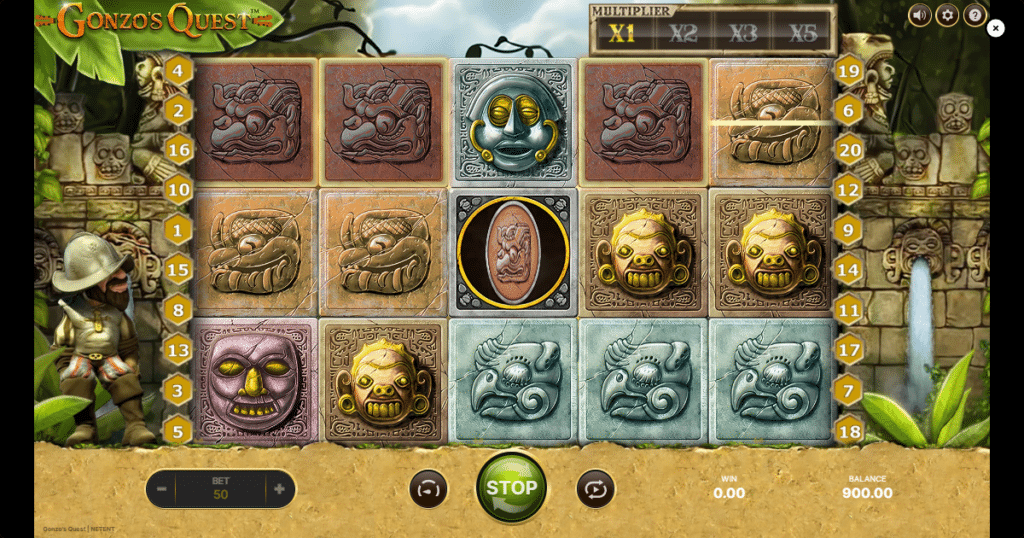
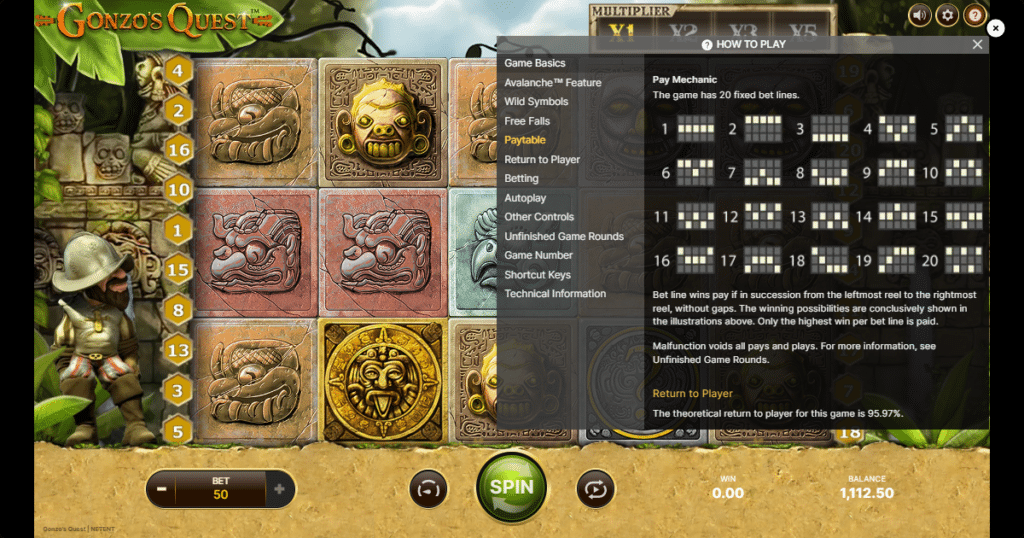
Gonzo’s Quest runs on a five by three grid with twenty fixed paylines. The theme follows Gonzo, a cartoon conquistador hunting El Dorado through Incan ruins, and the symbols are seven carved stone masks with no card royals, which is a small design choice I appreciate because it keeps the paytable thematically coherent. The published RTP is 95.97 percent, and this is the number I want to spend real time on, because it behaves differently here than on most slots.
First, a point of consistency that matters. Unlike Play’n GO or Pragmatic Play titles, which ship with multiple selectable RTP tiers that operators can dial down, the original 2011 Gonzo’s Quest ships as a single certified version at 95.97 percent. Every licensed casino running the classic game is running that exact figure. That consistency is genuinely valuable from an analytical standpoint, because it means the number on the review site is the number at your casino, with no asterisk. Be careful not to confuse it with Gonzo’s Quest Megaways, which is a completely separate 2020 Red Tiger title with its own multi tier RTP structure and a totally different math model. When people quote wildly different figures, they are usually mixing up the two games.
Where the RTP Actually Comes From
This is the part most reviews skip, and it is the most important thing to understand about this game. That 95.97 percent is not distributed evenly across the game. It splits roughly 65.3 percent from the base game and 30.7 percent from the Free Falls bonus feature. In plain terms, almost a third of everything this game will ever pay you back is locked inside the bonus round. If you never trigger Free Falls, you are effectively playing a machine with an RTP in the mid sixties, which is dreadful. The bonus is not a nice extra here. It is where a third of your theoretical return physically lives.
This has a direct, practical consequence for how you should think about a session. Your entire objective, mathematically, is to survive long enough in the base game to reach the bonus, because that is where the machine pays back what it owes you. Any bankroll plan that does not account for reaching Free Falls is ignoring 30 percent of the game’s return. I will come back to what that means for bet sizing, but hold onto the idea: the base game is a waiting room, and the math knows it.
The Avalanche Mechanic, Measured
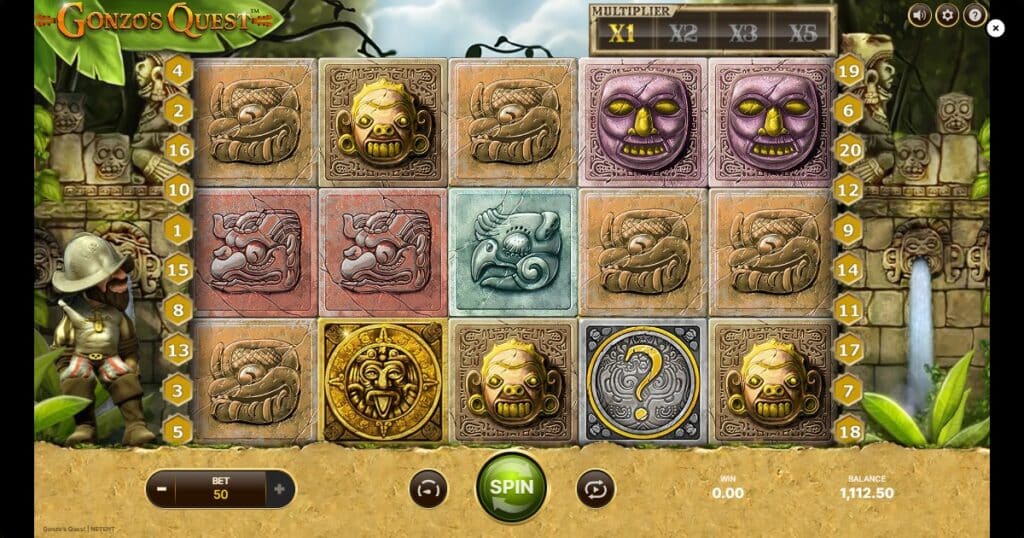
Here is what made this game historically significant. Instead of spinning reels, symbols fall into the grid like tumbling stone blocks. When you land a winning combination, those symbols explode and vanish, and new blocks fall to fill the gaps, which can create a fresh win from the same paid spin. NetEnt called it the Avalanche, and every tumble, cascade, and drop mechanic in the modern market descends from it. Pragmatic’s tumble in Sweet Bonanza, the cascades in dozens of other titles, all of it traces back to this 2011 grid.
The mechanic is tied to a multiplier ladder, and the exact numbers matter. In the base game, each consecutive Avalanche on a single paid spin steps the multiplier up: your first win pays at 1x, the second cascade at 2x, the third at 3x, and the fourth and any subsequent cascade at 5x, which is the base game ceiling. A non winning drop resets the ladder to 1x. So the base game is quietly encouraging you to chain wins, and the value of a chain grows faster than the number of clears, because a small first win that survives into a fourth cascade is suddenly being paid at five times its face value.
The base game hit rate sits around 41 percent, which is unusually generous. That works out to roughly one winning spin in every 2.4, meaning you are landing something far more often than on a comparable high volatility title. This is why I classify the base game as medium volatility in feel even though the overall profile is medium to high. You are not sitting through the hundred spin droughts that a game like Book of Dead subjects you to. The base game stays active, which keeps you in your seat and, more importantly, keeps your bankroll alive long enough to reach the part that pays.
Free Falls – Where the Math Fires
The bonus triggers when three Free Fall scatter symbols land on the first three reels. One important and frequently overlooked detail: the Wild, a question mark stone block, can substitute for the scatter to complete that trigger. So a Wild on reel two alongside scatters on reels one and three still fires the bonus. This meaningfully increases your effective trigger rate compared to games where wilds and scatters operate independently, and it is the kind of quiet design generosity that does not show up in the headline stats.
Inside Free Falls, the entire multiplier ladder shifts up. Instead of running one, two, three, five, it runs three, six, nine, and then fifteen from the fourth consecutive Avalanche onward. That jump from a base game ceiling of 5x to a bonus ceiling of 15x is the mechanical heart of the whole game. It is the reason 30 percent of the RTP lives in the bonus despite the bonus being a small fraction of your total spins. When you chain cascades inside Free Falls with the multiplier sitting at fifteen, modest symbol combinations turn into the payouts that define a good session.
The maximum win on the classic build is frequently cited around 2,500x your stake, and you will occasionally see 2,274x quoted from live spin tracking, which is essentially the same practical ceiling observed in real data. By modern standards this is a low max win, and I will not pretend otherwise. Games today routinely advertise ceilings ten or twenty times higher. But the ceiling and the experience are different questions, and Gonzo’s Quest delivers its return through frequency and chaining rather than a lottery style top prize. That is a legitimate design philosophy, just an unfashionable one.
Bet Sizing Given the Math
Now I can turn the analysis into a concrete recommendation. Because roughly a third of the RTP is gated behind Free Falls, your bankroll’s primary job is to buy enough spins to reach the bonus a meaningful number of times. If the bonus is a relatively rare event and it holds 30 percent of your return, a bankroll that only funds thirty or forty spins is statistically likely to end before you ever see the part of the game that pays properly, which means you will experience an effective RTP far below the advertised figure through sheer bad luck of variance.
My rule for this game is to size bets so that your session bankroll funds at least 150 to 200 spins. On a medium volatility game with a 41 percent base hit rate, that is usually enough to reach Free Falls one or more times and let the real math express itself. Divide your total budget by 150, round down, and that is roughly your maximum sensible bet. If that number feels uncomfortably small, your budget is too small for this game, and no bet sizing trick will fix that. Variance is a tax you pay for playing at all, and undersizing your spin count just guarantees you pay it without collecting the reward.
Test It in the Demo First
I always run a demo before committing real money, and here it is genuinely instructive rather than just cautious. Play a couple hundred demo spins and pay attention to two specific things. First, count roughly how often you reach Free Falls, because that frequency is the single variable that determines whether your planned bankroll is adequate. Second, watch how the multiplier ladder behaves in practice, both in the base game and in the bonus, so you develop an intuitive feel for how a chain builds value. The demo runs the identical RNG and math, so what you observe transfers directly to real play, minus the cost.
The demo will also cure you of any illusion that you can influence outcomes. There is no skill element here, no optimal timing, no hot or cold state. It is a random number generator balanced against a fixed RTP, and the only decisions that matter are the ones you make before you spin: which game, what bet size, and how long you intend to play. Everything after that is variance doing its work.
The Paytable in Numbers
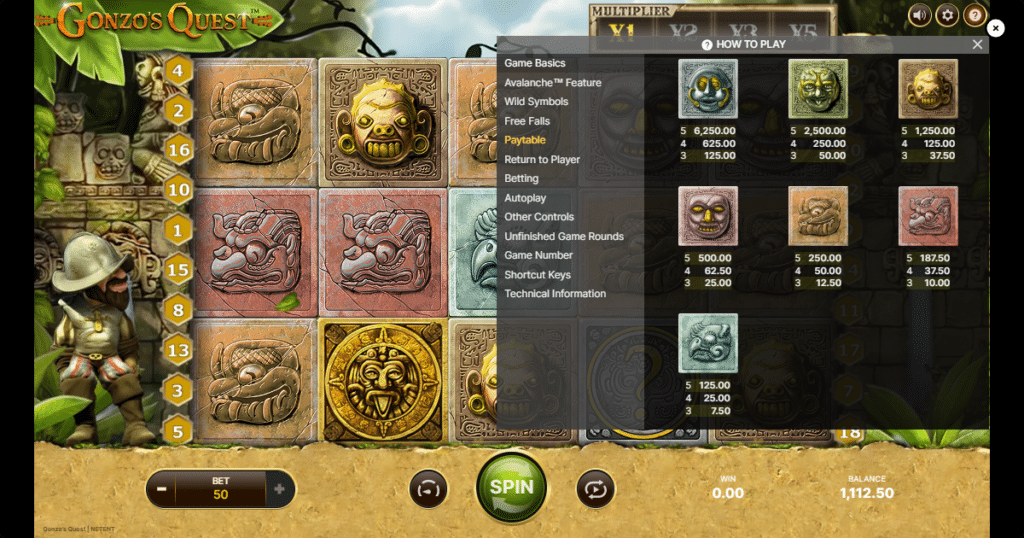
For completeness, here is how the symbol values distribute, because the shape of a paytable tells you where a game concentrates its risk. The seven masks are ranked, and the top symbol pays 125x your stake for five on a line, which is the highest single combination payout before any Avalanche multiplier is applied. The bottom tier masks pay only around two to three times your stake for a five of a kind. That is a steep gradient, and it tells you the game concentrates its high end value in the top two or three symbols, which is typical for a title that leans on multiplier chaining rather than flat symbol payouts.
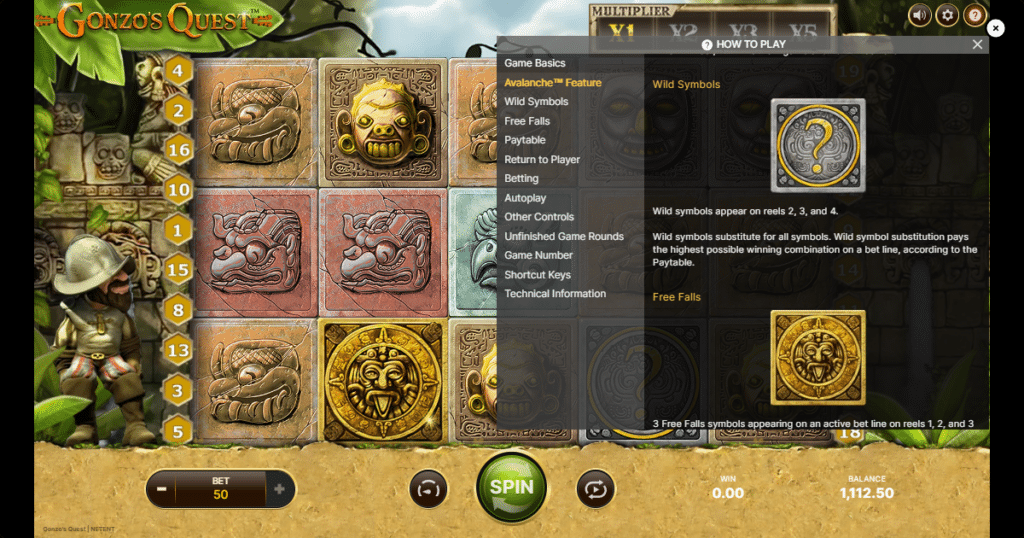
What makes this paytable work is the interaction with the multiplier ladder. A 125x top symbol win is respectable on its own, but caught inside a Free Falls chain at a 15x multiplier, that same combination is suddenly paying at a level that approaches the max win. The paytable and the multiplier system are not two separate features. They are a single mechanism, and reading them together is the only way to understand where the 2,500x ceiling actually comes from. It requires a high value symbol landing across multiple lines with the multiplier maxed, a convergence that is rare by design and is precisely why it sits at the top of the pay structure.
How It Compares to Its Descendants
It is worth positioning this game against the mechanics it spawned, because context sharpens the analysis. Modern cascade slots like Sweet Bonanza and Gates of Olympus took the tumble concept and layered on far higher volatility, bigger multipliers, and max wins in the tens of thousands. They are more explosive and, for many players, more exciting. But they are also less consistent, with base games that pay a thinner trickle and returns concentrated even more heavily in rare bonus events.
Gonzo’s Quest, by comparison, splits its return more evenly and keeps its base game genuinely active. If you graph the two philosophies, the modern titles produce a spikier distribution with rarer, larger peaks, while Gonzo’s Quest produces a smoother one. Neither is objectively better. They serve different risk appetites. But if you value session longevity and a steady pulse of small wins over the thin chance of a massive one, the original still competes on the exact terms it was built for, which is a remarkable thing to be able to say about a fourteen year old slot.
The Analytical Verdict
Gonzo’s Quest is a mechanically sound, historically important game with an honest and consistent RTP, an unusually active base game, and a bonus round that is genuinely distinct from base play thanks to that multiplier jump to fifteen. Its weaknesses are equally clear in the data: a low max win by current standards and an overall RTP of 95.97 percent that sits just below the 96 percent many players treat as a baseline. Neither of those is disqualifying, but both are real.
What I respect about this game is that its numbers are transparent and its design is coherent. The RTP is a single consistent figure. The multiplier ladder is legible. The base game keeps you engaged instead of punishing you. If you want a medium volatility experience where the bonus feels earned rather than random, and you go in with a bankroll sized to actually reach that bonus, Gonzo’s Quest still holds up more than a decade later. Just understand before you start that a third of your return is waiting inside Free Falls, and build your session around getting there.
| RTP | 95.97% |
| Volatility | Medium-High |
| Max Win | 2,500x |
| Paylines | 20 |
| Grid | 5×3 |


