

The Best Slots and How to Spot One Yourself
I have been playing slots for about twenty years, which is either a qualification or a warning depending on how you look at it. Long enough, anyway, to have lost count of the best slots lists I have read that were nothing more than whatever the site was being paid to push that month, dressed up as expert opinion. So this is not that. I am not ranking anything and nobody is paying me to like a game. What I want to do is tell you how I actually judge a slot, so that next time you are staring at a lobby with three thousand games in it, you can work out for yourself which ones are worth your money and which are just loud.
There is a table further down with a few games that have earned their reputation over the years. Those will change. Games come and go, new ones get better, old favourites start to feel dated. But how you tell a good one from a bad one, that part does not change, and that is the useful thing to learn.
RTP and Why You Should Not Trust It as Much as They Want You To
Everyone throws around RTP like it means something precise. Return to player. It is the slice of all the money wagered that a game hands back over a truly enormous number of spins. Ninety six percent RTP means the game keeps four out of every hundred, on average, spread across every player who ever touches it and millions upon millions of spins. That four percent is the house edge and it never, ever goes away. Fine. Useful to know.
But here is what nobody tells the new player. That number is not about your night. It is not a refund rate. You can hit a bonus in your first ten spins and leave up three hundred percent, or you can feed it two hundred spins and watch almost nothing come back, and both of those are completely normal outcomes on a ninety six percent game. The average only shows up over a span of play far longer than any human being sits at one machine. So use RTP to compare games, sure. Just do not sit there after a rough hour muttering that a ninety six percent slot owes you money, because it does not, and thinking it does is how people talk themselves into stupid decisions.
And watch this next bit closely, because it is where you actually get robbed. Loads of providers ship the exact same game with several RTP settings baked in, and some casinos quietly run the low ones. Same slot, same graphics, same everything, paying ninety six at an honest site and something grim like ninety two, or worse, at a shady one. You would never know by looking. The only way to check is to open the little info screen inside the game, the i or the question mark, and read the real number at the casino you are actually on. If it is running a gutted version, get up and play somewhere else. There is no shortage of honest operators, so there is no reason on earth to sit there getting shorted on a game you could play properly next door.
Volatility Is the Thing That Actually Decides Your Night
If RTP is the number everyone parrots, volatility is the one that actually matters, and it gets a fraction of the attention. Variance, some people call it. All it means is how a game pays. Low volatility drips small wins at you constantly. High volatility makes you wait, sometimes forever, and then pays big when it finally decides to. You can have two games with identical RTP that feel like completely different sports.
Low volatility is the comfort food. Your balance ticks up and down gently, little wins keep landing, and you can nurse a small budget through a long, calm session without your pulse ever moving. Nobody gets rich on these. That is not the point of them. The point is to unwind. But I will warn you about the trap, because it caught me more than once. The losses on these games are so quiet and so gradual that you sit there relaxed, half watching, and only later look down to find your balance has quietly bled away while you were enjoying yourself. Low volatility does not punish you loudly. It lulls you. Set a limit anyway.
High volatility is the other beast entirely. You can spin fifty, a hundred, more, and see basically nothing, with a base game that does not even bother to keep you company through the drought. Then a bonus hits and pays for the whole miserable stretch at once. Or it does not, and you start waiting again. These games are built so the rare big win carries all the small losses plus the edge on top. Played by someone who knows what they signed up for, they are a genuine thrill. Handed to a casual player who picked it because it looked cute, they are a bankroll shredder, and I have watched exactly that happen more times than I can count. The game was not broken. It was doing precisely what it was designed to do. The player just did not read the room.
Neither one is better. They are tools for different jobs. Calm evening, small money, go low. Chasing a proper hit and you can stomach the dead spells, go high. Pick the wrong one for your temperament and a session that should have been fun turns into you gritting your teeth. Half the misery I see people put themselves through is just a mismatch between the game and the mood they were in.
Features and the One That Should Scare You
Slots these days come stuffed with features and the info screen can read like a menu in a language you do not speak. Strip the themes away though and it is mostly the same handful of tricks. Free spins, the classic bonus round you trigger with scatters, and on a lot of games that round is where most of your actual return is hiding. If a slot’s whole payout lives inside a bonus you rarely trigger, that is a high volatility game whatever the box says.
Then you have tumbles, or cascades, where winning symbols vanish and new ones drop in to maybe pay again off the same spin. Multipliers, which are usually the real engine behind the huge numbers you see people screaming about on streams. Expanding wilds, sticky wilds, the substitute symbols that fill reels or lock in place. None of it is complicated once you stop being dazzled by the packaging.
But there is one feature I want you to be genuinely wary of, and that is the bonus buy. More and more high volatility games let you pay a lump sum, often around a hundred times your stake, to skip the wait and drop straight into the bonus. It sounds handy. They market it hard. And it is the fastest way to empty your balance that exists in these games. Buying the bonus does not tilt the odds in your favour one bit. It just takes all the variance you would normally spread over hundreds of spins and crushes it into one expensive purchase, at the same RTP as normal play or slightly worse. Spend an evening buying bonuses and watch how fast it goes. If you ever press that button, do it knowing you are buying compressed risk and not an edge, because every convincing little reason to press it is the game whispering, not your own good sense.
Grids and Paylines, Quickly
The layout, written like 5×3 or 6×5, just tells you the reels and rows. A 5×3 is the old faithful, five reels across and three high, the shape most classic slots use. The bigger grids like 6×5 came in with the games that pay by scatter, where you win by landing enough matching symbols anywhere on the board instead of along set lines.
Which brings up paylines, which is just how the game decides you won. Older slots use fixed lines, and a lot of them let you turn lines on and off. Rookies cut the lines down to save money and quietly wreck the maths doing it, because fewer lines means less coverage and a worse shot at the bonus. If you are on a payline game, leave them all switched on and drop your coin value instead if you need to play cheaper. The scatter pays games skip lines completely, so there is nothing to fiddle with, you just need the symbols on the board.
A Few That Have Earned It
Right, with the groundwork done, here are a few games that have earned lasting reputations, each a decent example of a different style rather than a ranked list. Treat them as reference points. And every one of them has a free demo, which you should always play before spending a penny. The table shows the standard build figures, so check the real RTP wherever you actually sit down.
| Slot | Provider | RTP | Volatility | Max Win | Grid |
|---|---|---|---|---|---|
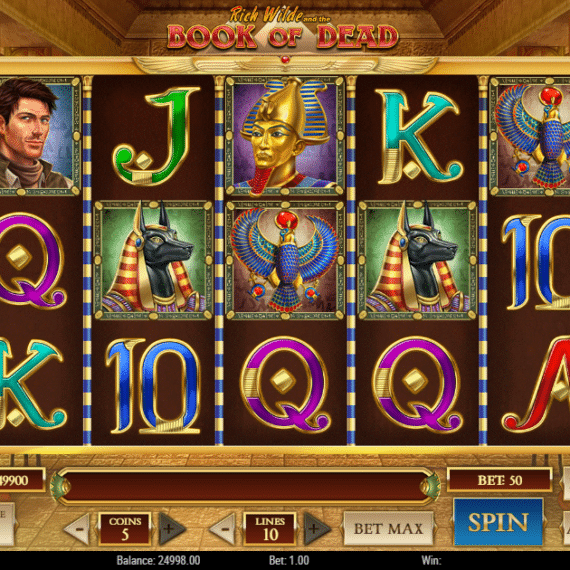
| Book of Dead | Play’n GO | 96.21% | High | 5,000x | 5×3 |
| Gonzo’s Quest | NetEnt | 95.97% | Medium-High | 2,500x | 5×3 |
| Starburst | NetEnt | 96.09% | Low | 500x | 5×3 |
| Sweet Bonanza | Pragmatic Play | 96.48% | High | 21,100x | 6×5 |
| Gates of Olympus | Pragmatic Play | 96.50% | High | 5,000x | 6×5 |
Each of these stuck around for a different reason. One or two invented a mechanic that half the industry then copied. Some just nailed a simple idea so cleanly that nothing newer really beat it. Others give you a specific kind of thrill that keeps people coming back even knowing the risk. What not one of them is, is a way to make money. Any list that sells slots as anything other than entertainment is lying to you, and now you know enough to spot that too.
For the Love of God, Play the Demo First
This is the single habit that will save you the most grief and it is completely free. Before you put real money into any slot, play the demo. Not three spins. Properly. Long enough to trigger the bonus a couple of times and get a feel for the pace. The demo runs on the exact same maths as the real thing, so what you get is an honest look at the game with none of the cost.
What it really shows you is whether the game suits you at all. Plenty of people are sure they want a high volatility slot right up until they sit through twenty dead spins and realise they cannot stand the wait. Others find a low volatility game puts them to sleep. Far better to find that out for nothing than to deposit and feel cheated. And on the games with a bonus buy, the demo is worth even more, because you can hammer that buy button ten or twenty times and see for yourself how many of those bonuses land with a wet thud. It is the best cure I know for the itch to overspend on the real one.
Questions I Get Asked a Lot
What makes a slot good? Depends entirely on what you are after, and anyone who gives you one answer with a straight face is selling you something. A good low volatility slot and a good high volatility one are good in totally opposite ways. The best one for you is the one whose pace and features and volatility match your mood and your budget, running at a fair RTP. That is it.
Are the demos really the same as the real games? Yes, in every way that counts. Same certified random number generator, same maths, same everything. The only difference is nothing is on the line. Which is exactly why they are so handy for learning a game before you risk anything.
Is there a strategy that beats them? No, and side eye anyone who says there is. Slots run on a random number generator against a fixed RTP. No hot machine, no game that is due, no timing trick. The only calls that change your result you make before you spin, which game, what stake, how long you play. After that it is all variance and you are just along for the ride.
Is higher RTP always the better pick? Higher is generally better value over the long haul, but it is not the whole story, not even close. A high RTP low volatility game and a slightly lower RTP high volatility one are chalk and cheese, and a point or two of RTP matters far less over one session than the volatility does. Use RTP to compare similar games and to catch the gutted builds. Do not treat it as the only thing that matters.
Should I bother with the bonus buy? Careful with it. It does not improve your chances of a good result at all. It just crams all the risk into one pricey purchase at the same or worse RTP, which makes it the quickest way to empty a balance there is. If you use it, use it knowing you are buying compressed variance and not an advantage.
Keep It Fun, Keep It Yours
Everything I have said here is meant to help you play sensibly and enjoy it, not to talk you into betting more. Slots are entertainment and nothing else. Every one is built with a house edge, which means the casino comes out ahead over time. That is not a conspiracy, it is just the maths, and being honest with yourself about it is the healthiest way to sit down at one.
Set a budget before you start and treat it as the price of a night out, money you have already made peace with losing. Never chase what is gone by cranking up your bets to win it back, because that is the surest way I know to turn a small bad night into a genuinely painful one. Put a limit on your time as well as your money, and when you hit either, walk, even when it feels like the big one is right around the corner. It is not owed to you. That feeling that a win is due is the exact feeling that empties wallets.
And if the fun drains out of it, if you catch yourself playing to escape or to claw back losses instead of because you are enjoying it, please ask for help. GambleAware, GamCare, the National Council on Problem Gambling, all free and all confidential, and just about every licensed casino gives you deposit limits, cooling off periods and self exclusion you can switch on whenever you want. This is supposed to be fun and it is supposed to stay in your control. If it stops being either of those, there is no shame at all in stepping back or reaching out.


